
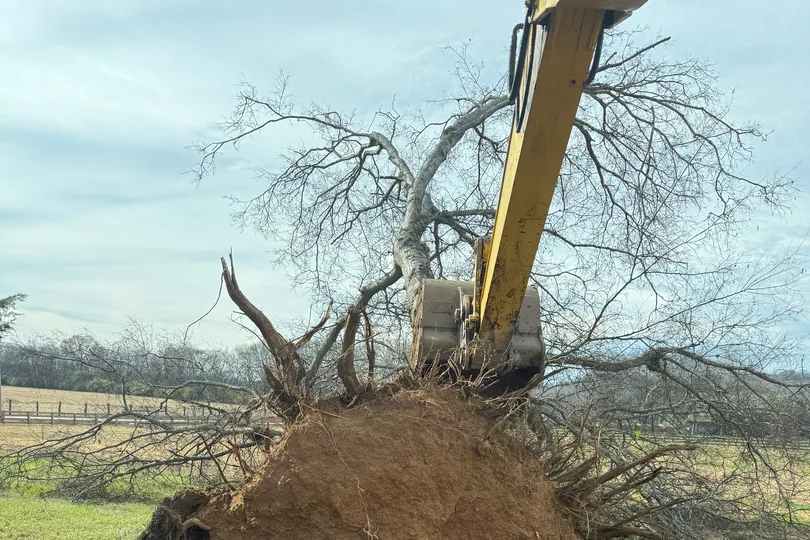
Do you have to call 811 before you dig in Tennessee?
Yes, in most cases. Under Tennessee law, whoever does the digging must get a locate ticket from Tennessee 811, 3 to 10 working days before work starts, the Tennessee Public Utility Commission says. The law exempts a property owner digging with hand tools on their own property, though Tennessee 811 still urges a call.
Who has to call 811 in Tennessee?
The person doing the digging has to call 811 in Tennessee. The Tennessee Public Utility Commission says each person responsible for excavating or demolishing must get a locate ticket from TN811.
Homeowners can be excavators too. Tennessee 811 says that if you do your own digging, you are an excavator under Tennessee law and follow the same white lining rules as any contractor. The one exemption for owners sits in Tennessee Code Section 65-31-106: the notice rule does not apply to a property owner using non-mechanized tools or equipment on their own property. A shovel in your own flower bed is exempt; a rented trencher or mini excavator is not.
If you hire the work out, Tennessee 811 says the person who will be doing the digging makes the call. A crew doing excavation work with a machine pulls its own ticket before it digs.
What counts as digging under Tennessee’s 811 law?
Any work that moves, places or removes earth counts, by machine or by hand. Tennessee’s definition of excavation includes hand digging, augering, backfilling, blasting and boring. It also lists digging, ditching, drilling and grading, along with ripping, scraping, trenching and tunneling.
Small jobs count too. Tennessee 811 says every digging job needs a call, even small projects like planting trees and shrubs. It also says fence installation always requires a call to 811. The law’s own definition is narrower: it leaves out tilling soil for farming, and digging fence post holes on private property outside a utility’s recorded easement and more than 100 feet from the edge of a street’s pavement.
Under that definition, trenching for drain pipe or conduit is excavation. So is a driveway regrade, because grading is on the list. Backfilling the trench afterward is on the list too.
How far ahead do you have to call 811 in Tennessee?
Call at least 3 working days before you dig, and no more than 10, the Tennessee Public Utility Commission says. Once the ticket is in, the utilities serving the area have 3 business days to mark their lines. Tennessee 811 puts that window at 72 hours, excluding holidays and weekends.
Tennessee 811 says you can give as much as 10 working days’ notice, which it calls postdating a ticket. With its high volume of tickets each day, extra notice may make your start date more reliable.
Tickets go in by calling 811 or (800) 351-1111, or online. Have the county, city, address and nearest cross street of the dig site ready. Tennessee 811 also asks where on the property you want marking done.
Then wait for the legal start date and time on your ticket. You can track each utility’s response through Positive Response, a Tennessee 811 service.
A ticket is valid for 15 calendar days from the start date on it. To keep working, call in at least 3 working days before it expires to renew. Tennessee 811 says the renewal comes with a new ticket number.
Do you have to mark the dig area in white?
Yes. Tennessee law requires white marks on the proposed dig area unless an exception applies. The marks let utilities clearly identify where work will take place. Use white flags, paint or stakes, the Tennessee Public Utility Commission says.
Tennessee Code Section 65-31-106, titled Notice of Intent to Excavate or Demolish, lists these exceptions:
- The street address on the ticket shows the exact spot, because of the size of the property.
- The ticket names a driveway or other easy-to-find point, plus the street address or block and lot number.
- The ticket places the site on a road between two intersections, where no address or lot number applies.
- The person responsible for the dig and every utility with lines in the area met before work began.
What do the 811 flag colors mean?
In Tennessee 811’s uniform color code, each color marks one type of underground line. Marks can show up on the ground as paint, stakes or flags.
| Color | What it marks |
|---|---|
| Red | Electric power lines, cables, conduit and lighting cables |
| Yellow | Gas, oil, steam, petroleum or gaseous materials |
| Orange | Communications, alarm or signal lines, cables or conduit |
| Blue | Potable (drinking) water |
| Purple | Reclaimed water, irrigation and slurry lines |
| Green | Sewers and drain lines |
| White | Proposed excavation |
| Pink | Temporary survey markings |
Keep the flags and paint in place. Tennessee 811 says marks that get covered or moved can lead to damage.
How close can you dig to a marked line?
Inside the safety zone around a mark, Tennessee law calls for reasonable care, such as hand digging when practical. That zone is a strip at least 4 feet wide. It is no wider than the width of the utility plus 2 feet on either side. The Tennessee Public Utility Commission also lists pneumatic hand tools, or other methods the line’s owner approves.
Tennessee 811 says locating is not an exact science, so a line could vary from the position of its marks. It says the best way to pinpoint a buried line is to carefully expose it.
Never guess how deep a line sits. Tennessee 811 says the depth of utility lines varies. Utilities are not required to provide depth information with their marks.
If you find clear evidence of a line that was not marked, stop and call 811 again. The state says the excavator must report the unmarked line to 811 in a second notice before digging.
Which lines will 811 not mark?
811 will not mark private lines, which are typically the property owner’s responsibility. Tennessee 811 says facility operators may not locate or mark private underground facilities. The public utility usually ends at the meter or point of service.
Tennessee 811 lists these as private lines:
- Power to detached garages, barns, pool heaters and landscape lighting
- Lines to septic systems, and the water line from the meter to the house
- The sewer line between the city or county system and the house
- Irrigation systems and invisible pet fences
- Propane lines and grill connections
- Well lines
Electric and gas lines are typically marked only up to the meter. Past it, they may run on to other buildings, yard lights or other parts of the property. Tennessee 811 says it is your responsibility to have private lines located. It provides a list of private locating services in Tennessee.
Tennessee 811 notifies its member utilities of your work. It says you may also want to contact any non-member utilities you know are in the area.
Private lines matter on yard projects. A French drain trench can cross a pet fence wire or a line to a barn.
What happens if you dig without calling 811?
Under Tennessee Code Section 65-31-112, a violation can bring a civil penalty of up to $10,000 per incident, and the violator may be required to complete training. When the violation was gross negligence or willful or wanton misconduct, training is required and the cap rises to $15,000 per incident.
Tennessee 811 says digging without calling can disrupt service to an entire neighborhood and harm you and those around you. It can also lead to fines and repair costs. Working on an expired ticket is against state law too, and it may get you reported to the state.
Large jobs can need a permit on top of the ticket. In unincorporated Williamson County, work that disturbs more than one acre needs a county Land Disturbance Permit. Our guide to land clearing permits in Williamson County covers that rule.
Mid South Mulch has been in business since 1996. Our excavators cut trenches for drain pipe and utility lines across Williamson County and part of Rutherford County. Call (615) 599-7550 for a free on-site quote on trenching services in Franklin.